Ticket to Ride: Original or First Journey?
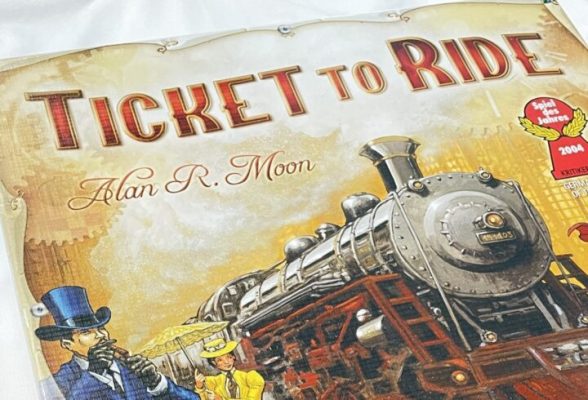
The choice is not as simple as it sounds. It’s easy to tell you to get the kid version if you have kids, but that wouldn’t do these games justice. The ages on the box don’t tell you anything about what it’s like to play these games.
If you’re here, you’re probably asking questions like, “Is Ticket to Ride: First Journey worth it?” or “Does Ticket to Ride: First Journey help kids learn to play Ticket to Ride?” Maybe you’re wondering, “We have Ticket to Ride: First Journey and love it. Is Ticket to Ride worth having too?”
It comes down to which play experience you want to have. They’re similar games with similar rules, but the strengths of each game create different play experiences suitable for different groups. Let’s get into it so you can get answers to all your questions.
How Does Gameplay Differ?
Ticket to Ride isn’t very complex to play. You get destination cards and you’re awarded points for connecting the cities on each card. You’re also awarded points for which tracks on the board where you place your train pieces to connect those destinations.
Simple play does not equal simple strategy. The destinations you choose, the number of trains you place to get to each destination, and how you interact with the other players all contribute to which player earns the most points and wins the game.
Ticket to Ride: First Journey aims for simpler mechanics to allow a younger group of players to understand the game. Several small differences achieve this simplicity: how to win, how the game ends, and what actions players take on their turn. All of these simplifications trace back to one larger change. Ticket to Ride: First Journey has no point system.
Players win by completing a required number of destinations first instead of using the point system of the original Ticket to Ride game, where the game ends when one player drops below three train pieces.
The removal of the point system switches the focus from how players play the game to what players need to do to complete the required number of destinations.
The point system in the original game functions similar to a grading system, awarding points for good decisions about destination cards and successfully using longer train segments to connect destinations. It also punishes poor decisions by subtracting points for unfinished destination cards.
Ticket to Ride: First Journey removes the “grading system” and lowers the strategy level by switching the focus to destinations only. Each completed destination gets you closer to winning, but the penalties for unfinished destinations no longer occur.
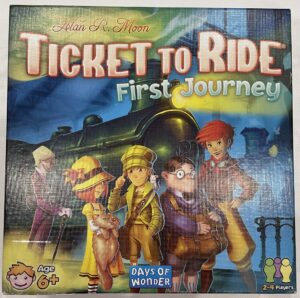
Which Game Removes Barriers for Your Group?
Choosing the right game encompasses removing the right barriers to play and these games remove completely different barriers. Ticket to Ride: First Journey invites younger players and beginners to the table with its shorter play time and simplified goals.
While the full Ticket to Ride game includes more strategy and a longer play time, it also has a higher player count. Ticket to Ride invites more players to the table at once, providing they can handle the longer play time and strategy of the game.
So Ticket to Ride: First Journey removes barriers to allow a wider range of players to play and Ticket to Ride includes more players in a narrower range of ability.
Which Game Provides the Right Connection?
We Play to Spend Time Together
Both games provide an opportunity to spend time together, but in very different ways. Ticket to Ride: First Journey’s simplicity and lower player count offer more opportunities for deep connection during gameplay as well as light-hearted fun.
Ticket to Ride offers a more learning-based connection experience, highlighting opportunities to compete and evaluate strategies. You’ll learn a lot about other players through how they play the game.
We Respect Other Players
Ticket to Ride encourages a healthy respect for other players’ competition and skill. Players show respect through playing hard, showing good sportsmanship, and giving players credit when they make moves that benefit them, even if those moves hurt your own chances of winning.
Ticket to Ride: First Journey encourages players to practice many skills, expecting players to respect that the others may be at different levels, offering chances to explain rules, but giving each player the freedom to make their own choices. Players show respect by accepting where the other players are and allowing them to learn and grow.
We Play to Grow, Not Only to Win
Ticket to Ride: First Journey offers opportunities to grow in learning game mechanics and in basic strategy, building the skills that will allow them to step up into higher strategy games. It’s the perfect kind of growth for a kid’s version because it prepares kids to play more complex games as they grow.
Ticket to Ride’s higher strategy and point system encourage players to play well. It rewards planning, prioritization, and flexibility with points and the player who best utilizes these skills earn the most points. The skills practiced during Ticket to Ride transfer well to future games of Ticket to Ride and to other strategy games.
We Help Each Other Learn and Improve
During both Ticket to Ride and Ticket to Ride: First Journey, players keep their destination tickets to themselves, which limits strategy discussion during play. However, Ticket to Ride focuses more on how well players play, while Ticket to Ride: First Journey focuses on learning the mechanics that allow players to complete destinations.
Since Ticket to Ride: First Journey’s gameplay is more learning-focused, tips about the mechanics of the game go much further toward helping players be more successful. Ticket to Ride’s focus on playing well and competition tend to limit opportunities for strategy discussion during play and minimize incentives to help other players improve.
We Create an Enjoyable Experience for Everyone
Ticket to Ride fosters an environment of competition for players who love to test themselves, however the chances to block other players from completing destinations acquired through random draw might make it more difficult for those who struggle with good sportsmanship.
Ticket to Ride: First Journey does allow the same opportunities to block other players, but the simplified rules don’t penalize unfinished tickets. As a game designed for kids, who often struggle with good sportsmanship, it allows them a chance to succeed through flexibility instead.
The penalties in Ticket to Ride can make it hard for certain players to have an enjoyable experience.Ticket to Ride: First Journey allows practice of good sportsmanship (which makes a better experience for everyone!) by softening those penalties and encouraging flexibility when the game doesn’t go as one player planned.
Which Game Suits Your Group?
Ticket to Ride is a great game for strategy-minded players looking for competition. It plays well for groups up to five who have the basic skills to follow the mechanics and have already acquired some key skills (like sportsmanship and risk assessment).
Ticket to Ride: First Journey works better as a light strategy game for up to four players of varying ages or experience levels. The game will hold appeal for groups less focused on competition or testing themselves, and more focused on enjoying the time spent with those around them. It’s a great introduction to strategy for young strategists looking to practice the skills to level up into Ticket to Ride or for any player hoping to practice the skills and stamina for similar light strategy games.
How Will Players Grow?
In Ticket to Ride, players will exercise their individual strategic thinking skills. Through executive skills such as planning, prioritization, risk assessment, resource allocation, and flexibility, players will strive to play their best game every time and assess which of those strategies leads to higher points and wins.
Ticket to Ride: First Journey will improve some of those skills, but on a smaller scale. That’s one of the strengths of this kid’s version; it does prepare kids to step up into the original Ticket to Ride game.
But that’s not its only strength. The game also provides opportunities to practice the emotional regulation and patience that lead to good sportsmanship. While the game still focuses on the individual, the removal of the penalties allow for slightly more communication about strategy, making it feel more like a shared experience.
Choose Ticket to Ride If
Ticket to Ride works for groups of 5, assuming all players have the capacity to play the game. It shines for groups of strategy-minded players in search of a friendly (or not-so-friendly) competition. It’s likely to appeal to players who enjoy games like Settlers of Catan, Splendor, or Plague Inc.
Choose Ticket to Ride: First Journey If
Ticket to Ride: First Journey provides opportunities for togetherness through a fun light strategy experience. It’s a better choice for groups focusing on learning strategy, emotional skills like sportsmanship, or game mechanics that will translate well to other games. It’s a solid choice for any group of varying abilities and just as good as a light strategy game for any player. It’s likely to appeal to players who love games similar to Carcassonne, Dragonwood, or Castle Panic.