Sorry: A Simple Classic Shines for Mixed Age Groups
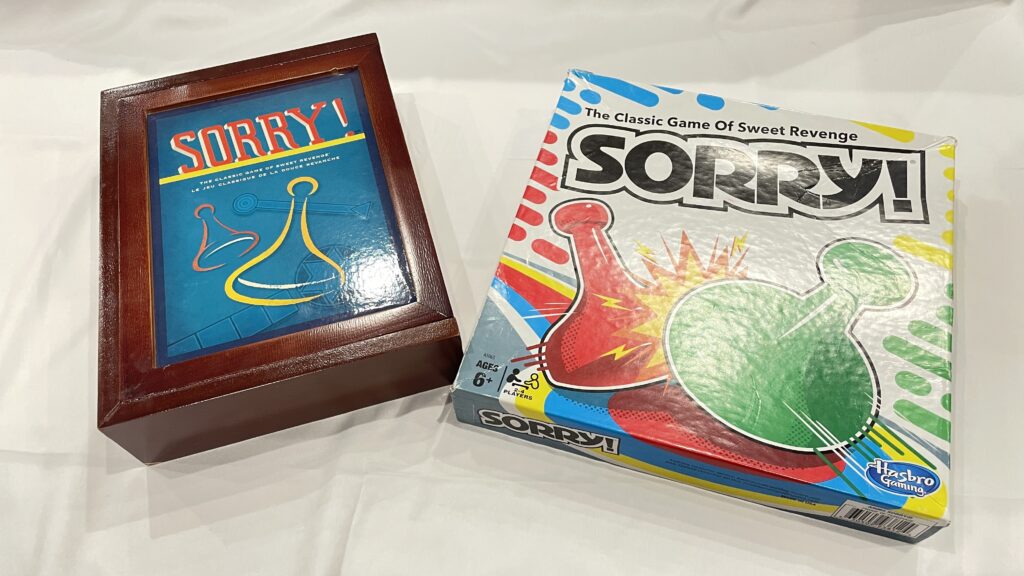
Sorry is a kid’s game, isn’t it? Isn’t it?
Not in my opinion. Sure, it’s simple, which makes it easy for kids to play. It’s also very heavily randomized, which makes it harder to apply strategy to the game because sometimes the cards just won’t favor you with the numbers you need.
So yeah, while you might not play the game without kids (though I have), it’s definitely got enough going on to make it interesting for adults who don’t mind a little simplicity.
While I wouldn’t tell every gaming group of adults to head out and buy Sorry for their game nights, if your group includes a variety of ages, this game is one to have.
Don’t believe me? Keep reading.
How to Play Simplified (Because Sometimes Rules Are Complicated)
To win, you’ll need to move all your pawns from Start to Home before the other players.
Players begin with four colored pawns in their matching Start circle. On your turn, you draw a single card. If it’s a number, you move any eligible pawn that many spaces around the board. A few of the number cards have special effects (like switching places on the board or drawing again).
To move a pawn out of Start, you must draw a 1, a 2, or a Sorry card. Sorry cards allow you to move a pawn out of Start and knock a different player’s pawn back into Start, taking that pawn’s place on the board.
And keep in mind, you must draw the exact number you need to get into Home. If you draw a card and can’t move any pawn that number of spaces, you forfeit your chance to move that turn.
If all your pawns reach your Home circle first, you win!
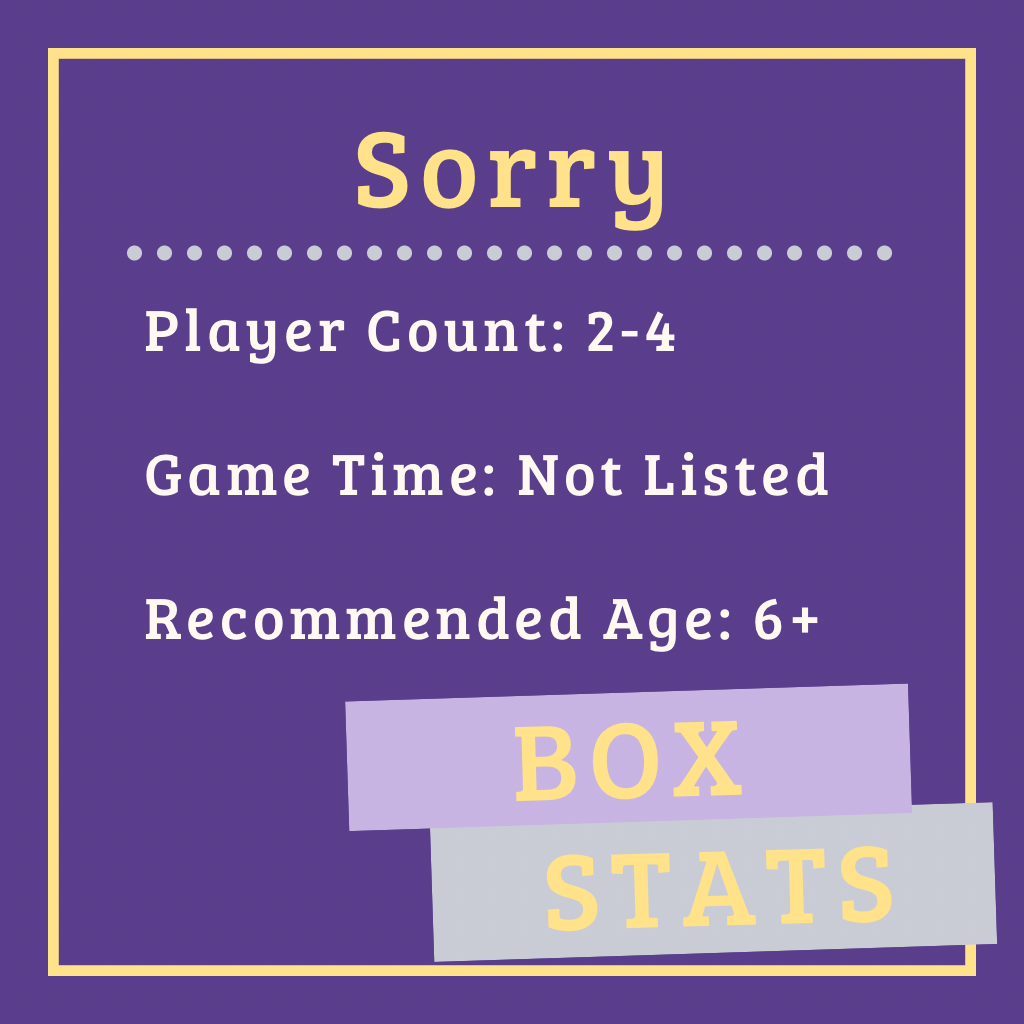
Barriers to Play and How to Remove Them
The number recognition and one-to-one counting are most likely to trip up younger players. With help and practice, these players will be able to participate and eventually play on their own. If you’ve got a little one struggling with this, give them some extra attention by playing with them alone outside of game nights. They’ll improve at playing and feel more confident during games with everyone.
How to Connect While Playing
We Play to Spend Time Together
If you’re playing games to spend time with those you love, Sorry gives you the opportunity to invite some of those less-included players to the table. The youngest of players can pick up Sorry pretty quickly, while even adults can join in on the fun. With such simple rules, you might even convince those who’ll say they’re “too old” to learn new games to jump in.
Preschoolers, kids, teens, adults, even grandparents can play. Sorry can mix up the groups so players who might not normally play together have that opportunity.
We Respect Other Players
It’s easy to get frustrated when playing Sorry, especially if you get stuck in Start for a long time or your pawns get knocked back into Start over and over by other players. One player might feel targeted if it happens to them often.
It’s important to remember that’s part of the rules and managing our own frustrations is the best way to show the other players respect. When one player lets their frustration get the better of them, it usually ends the fun for everyone, even if everyone plays the game to the end.
If one player is practicing this skill, it’s good to let the other players know in advance so they can help out and encourage that player.
We Play to Grow, Not Only to Win
Since Sorry easily sparks that frustration in some players, it’s also a great opportunity to practice managing that emotion. Players struggling to manage frustration can use Sorry as an opportunity to test and refine their strategies for keeping their cool, providing they communicate that goal to the other players.
Who This Game is For
- If your family has large age gaps, give Sorry a try. It’s simple enough for younger players to join in with the older players, without leaving stronger players completely bored.
- Kids playing independently will reach for Sorry often. It’s a great opportunity for them to practice life skills without the support of an adult. If you’re looking to build a collection of games for easy kid access, Sorry is a strong contender.
- Sorry’s simple rules and mechanics make it ideal for beginning players, especially the very youngest. If you’re teaching a youngster board games, Sorry has everything you need to succeed.
Top Learning Skills
Every time you play a game, you have an opportunity to build relationships with other players, but it takes intention to take advantage of that opportunity.
What you’re doing without trying? Building skills that have direct applications to life. Here are the top three skills you build while playing Sorry.
Emotional Resilience (Socio-Emotional)
It’s tough to work through big emotions well enough to move forward, but that’s exactly the skill Sorry practices. Sorry cards, difficulty leaving Start, or waiting on the right number to send your last pawn Home are all situations that could lead to frustration and disappointment for both beginners and experienced players.
As players discover and use strategies for calming themselves in small situations (like a Sorry card knocking their pawn back to Start), they discover strategies they can use in frustrating or disappointing life situations as well. Yes, there’s a big difference between getting your pawn knocked back into Start and getting passed up for a promotion at work, but handling the first situation well means a better chance of handling the second situation well.
Flexibility (Executive)
The randomization in Sorry requires players to change plans often throughout the game. You might be about to win and have several players draw Sorry cards and knock your pawns back into Start. You might find yourself starting over completely, with all your pawns in Start.
You might have a plan for one of your pawns that you never execute because you never draw the cards you need. In Sorry, you take advantage of each card you’re given as best you can, but you can’t control which cards you draw or which cards other players draw.
Players who change plans to best take advantage of their movement opportunities have a better chance of success in a game like Sorry.
Planning (Executive)
In a game based on random card draws, one of the top three skills is planning? Yep. You can’t plan for everything, but think about the ways you might use your pawns. If you only have one out, it’s likely to head around the board the long way.
If you have two out, you start thinking about the best way to play them. You want to keep your pawns available for movement so you aren’t missing out on turns, but you also don’t want to block your Start for too long or you won’t be able to get another pawn out.
Yeah, you’re not in full strategy mode, deciding exactly how you’ll move each pawn on every turn, but that doesn’t mean you’re not thinking ahead. Especially on those sorry cards. Players who set their pawns up well for several different options will have the most opportunities to take advantage when they draw the right card.
Sorry Shines for Mixed Ages
This “kid’s game” holds a lot of weight when you consider how many ages can play and gain valuable experiences that translate well to life. It holds its own best for mixed age groups, since kids love the concept and more experienced players won’t lose their minds from boredom. If that’s your group, Sorry is worth adding to your collection.
If You Liked This Game
Forbidden Island is a cooperative movement game where players race to claim several treasures before losing the necessary board pieces to complete their tasks. It’s a step up from Sorry in strategy and practices teamwork skills instead of emotional resilience.
If You Struggled With This Game
If Sorry’s mechanics are a little too difficult, try another simple movement game like Chutes and Ladders. It practices similar emotional regulation skills.
Helpful Resources
- If you’re looking for games players ages 2-5 can play, try Best Board Games and Card Games for Toddlers and Preschoolers.