Carcassonne: The Simplest Way to Bring Fun to the Table
You’ve got a new game to play. You sit down with family or friends, open the box, and pull everything out. You’re reading the instructions, trying to figure out how to play and identify the game components simultaneously, but you can’t find them.
One person picks up a deck of cards and starts flipping through them while another starts punching pieces out without a place to store them. The dice drop under the table, there are four different types of tiny pieces, and chances are high that something gets lost before you even start.
You could’ve played the whole game in the time it takes to figure out how to play.
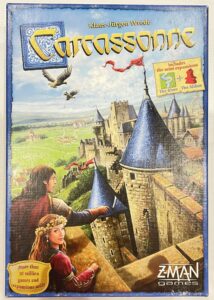
Carcassonne is not that game.
You open the box and take out the rules, getting through them quickly while everyone else checks out the tiles and claims a color. The rules are simple and easy to explain to all the players.
Pretty soon, the person next to you crows in triumph as they pull the tile they needed to complete their large city. You groan when you pull yet another road piece, but your smile fights to break free.
That’s Carcassonne.
How to Play Simplified (Because Sometimes Rules Are Complicated)
In Carcassonne, win by placing tiles and your pieces to earn the most points.
Each turn is pretty simple: a player picks a tile at random and adds it to the game board (which comes together over the course of the game like a giant puzzle). That player can place one of their pieces on a specific element on that tile to claim it. That piece must stay in place until that element is completed with other tiles or the game ends.
At the end of their turn, the player collects any pieces from their own completed elements on the game board and adds those points to the scoreboard. That’s it!
The base game scores cities, roads, and monasteries, with the option of adding fields once players have more experience.
After the last tile is played, each player scores the unfinished elements on the game board and the player with the most points wins.
Barriers to Play and How to Remove Them
The simplicity of the game mechanics makes this one of the easiest games to invite everyone to the table.
I’ve played this with one other person of varying ages and I’ve played it in larger groups, even larger than the recommended number of players using expansions and extra sets of pieces. I’ve played this with adults, beginners, and with kids as young as 3.
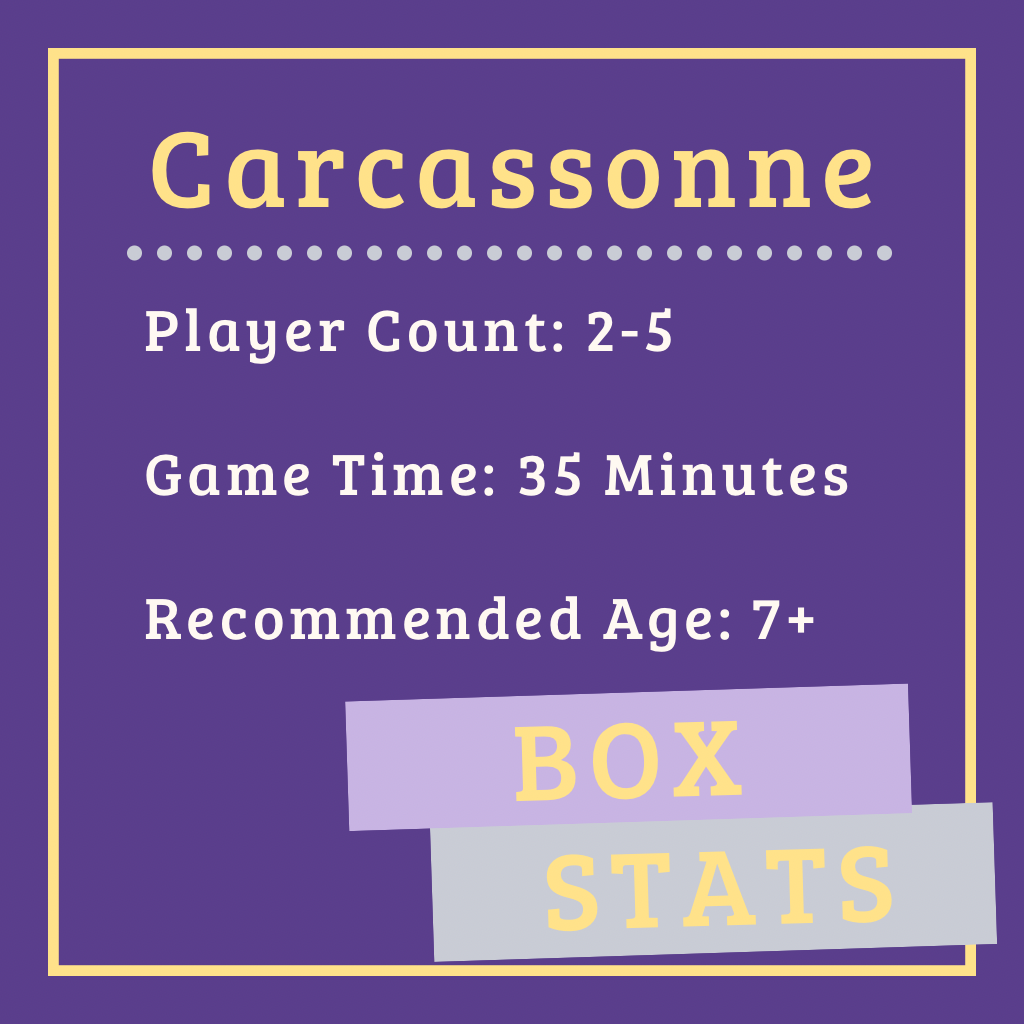
The largest barrier I’ve encountered is the length of the game. Like I said, I’ve played it with a 3-year-old (I’ve even been beaten by a 3-year-old!), but most kids that age don’t have the attention span to sit through a 40 minute game.
Good news! Removing some of the pieces makes the game shorter. If you’re interested in trying this one with kids ages 2-5, you can remove pieces from the game to make it shorter. Need more games for kids ages 2-5? Check out this list.
How to Connect While Playing
We Play to Spend Time Together
The player count for Carcassonne allows for both group experiences and quiet moments to focus on a single person you want to spend time with.
In a two player game, the light strategy level allows for conversations about interests, struggles, or life events that might not be discussed without the focused attention. I’ve used the game to spend one-on-one time with my own kids. My husband and I can play together without the kids, especially if we’re too tired for complex, high strategy games.
Larger groups of up to five players can focus on learning strategy together or becoming the kind of players that encourage new players to return to the table. The game shines most with a few more players, allowing for greatest joy in simply playing.
We Create an Enjoyable Experience for Everyone
Carcassonne’s simplicity shines when providing opportunities to connect because the simple rules leave mental energy available to focus outside simply playing the game. It becomes a veritable playground of opportunities to encourage players to grow as people.
For starters, built into the rules is an opportunity to play by sabotaging other players. You can steal board elements from other players by connecting tiles where you’ve placed your own pieces. You can test your skill and luck this way, but it’s also likely to leave other players rather dejected, especially the younger players or sore losers.
Those same rules clarify that elements with the same number of pieces from multiple players award those points to every player. Consider all the ways that rule could be used!
Struggling players could be awarded more points if another player works with them to finish a city they might not have finished on their own. Players could band together, creating teams that work together to earn the most total points.
The game experience becomes almost cooperative, giving every player the chance to enjoy the experience of playing and varying game dynamics to provide a different experience.
We Help Each Other Learn and Improve
Carcassonne’s simple mechanics and light strategy level make it perfect for players new to games or young players. More experienced players can take it a step further by offering advice and explanations to these players that help them develop their own strategy in the game.
Instead of placing your tile or adding pieces to a tile in silence, offer thoughts aloud that might help other players identify opportunities in their own game.
When adding a tile, explain, “I’ll start a new road right here because it’s adding points to my monastery and might help me finish it faster.” Or, when a player is starting a new city, you could mention, “That piece would fit nicely on your other city. Do you think there are enough tiles left for you to close both?”
Talk through it with them, if they feel inclined, but remember to show respect by letting them make the final choice. That player might not make the same decision you would, but they’ll benefit from trying different strategies you might not consider worthwhile.
Who This Game is For
- With simple setup and simple rules, your first time playing won’t be complicated. This makes Carcassonne an ideal game to train beginners to board games on how to play to connect and learn, instead of focusing only on winning at all costs.
- Families with children of varying ages will be able to include everyone, despite differing abilities. The simplicity allows for younger players to join, while more experienced players still face challenges created by varying pieces and decisions made by other players.
- Have you ever made plans with someone who “loves to play games” but didn’t elaborate on what kind? And you don’t know if they like Settlers of Catan and every expansion that ever existed or if we’re talking Uno and Sorry. Speaking from experience, Carcassonne is for you.
Top Learning Skills
Every time you play a game, you have an opportunity to build relationships with other players, but it takes intention to take advantage of that opportunity.
What you’re doing without trying? Building skills that have direct applications to life. Here are the top three skills you build while playing Carcassonne.
Spatial Awareness (Educational)
Similar to puzzles, Carcassonne requires players to add tiles to the board by connecting the elements on the tile drawn with the existing elements already placed. Most adults do this naturally because we learned the skill as children.
Carcassonne gamifies this skill, which is a great way to help kids practice and learn.
The game adds a second layer of learning by requiring new pieces to be placed on an element that isn’t already claimed. If you place a tile on a road that another player has claimed, you can’t claim the road on your tile.
So not only do players need to pay attention to the single tile they are responsible for placing on their turn, they also need awareness of the larger board and how their pieces interact with pieces from the other players.
Resource Allocation (Executive)
While Carcassonne doesn’t have currency or include any sort of trading, players have one important resource to manage well: your own colored pieces.
Your pieces are limited. If you run out, you’ll miss out on points you could earn with each turn until your pieces return from the board. Players must weigh the benefit of playing those pieces for each tile. Play too few and you won’t earn enough points to win the game. Play too many and you might miss out on more valuable opportunities later.
Flexibility (Executive)
It’s pretty simple, right? Play the tiles so you close your cities, roads, and monasteries to get the most points and return your pieces to use again in other places. There’s just one catch: randomization.
You draw tiles randomly, meaning you don’t know if you’ll get the piece that will close that city you’ve been working on all game. In fact, other players might place their own tiles so that it’s impossible.
Players have to adjust to the tiles they draw and the challenge of decisions they have no control over. The players who adjust when a piece gets permanently stuck on the board or don’t get the tile they’ve hoped for will be more successful.
Carcassonne Brings the Fun without the Work
Carcassonne skips the complicated work of setup in favor of jumping straight into the fun. Through simplicity in mechanics and light strategy, it invites a wide range of players to the table, making it perfect for mixed groups and beginner-friendly. If you’re looking for a game that brings many to the table with no fuss, Carcassonne is the right choice.
If You Liked This Game
For a cooperative game with a changing tile board, try Forbidden Island to level up in strategy.
If You Struggled With This Game
If Carcassonne was too long or the game mechanics were just above a player’s abilities, try Race to the Treasure for a cooperative tile game that doesn’t require placing additional pieces. It’s quick, fun, and includes ogres.