Castle Panic: Cooperative Fun for All Ages
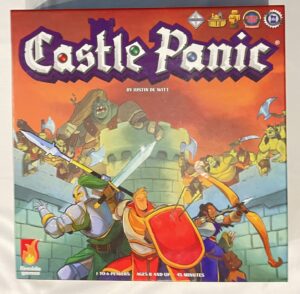
Imagine this.
You have one tower left on the board and the troll will destroy it at the end of this turn. The game will be over, the monsters victorious.
Your middle-schooler has the right card to win the game, but it isn’t their turn. It’s your 5-year-old’s turn, the one who doesn’t always stick around until the end of the game.
Your middler-schooler offers to trade the card to the 5-year-old for one that’s useless. Your 5-year-old slaps the card into the discard pile, removes the monster from the board, and wins the game for the players!
Your middle-schooler grins, knowing they had the card that won the game. Your 5-year-old dances around the living room after high-fiving everyone because they played the card that won the game.
You breathe a sigh of relief because not every game plays so easily or includes everyone, but tonight everyone is happy and that makes you happy. This memory will last you a lifetime.
How to Play Simplified (Because Sometimes Rules Are Complicated)
In this cooperative game, win by defeating every monster before all your castle towers are destroyed.
The board shows a circle with several rings and colors, your castle towers at the center surrounded by walls. Each colored ring is labeled with a type of warrior: archer, knight or swordsman. The cards in the deck are mostly these warriors in different colors, with a few bonuses added.
Turns are simple. You replenish your hand from the deck, trade a single card if it benefits you, then play as many cards as you like to injure the monsters or grant special actions. Once you’ve finished, the monsters move toward the castle and you draw a few new monster tokens to add to the board.
When you’ve run out of monster tokens and defeated all the monsters on the board, everyone wins. If the monsters destroy all the towers before you can defeat them, everyone loses.
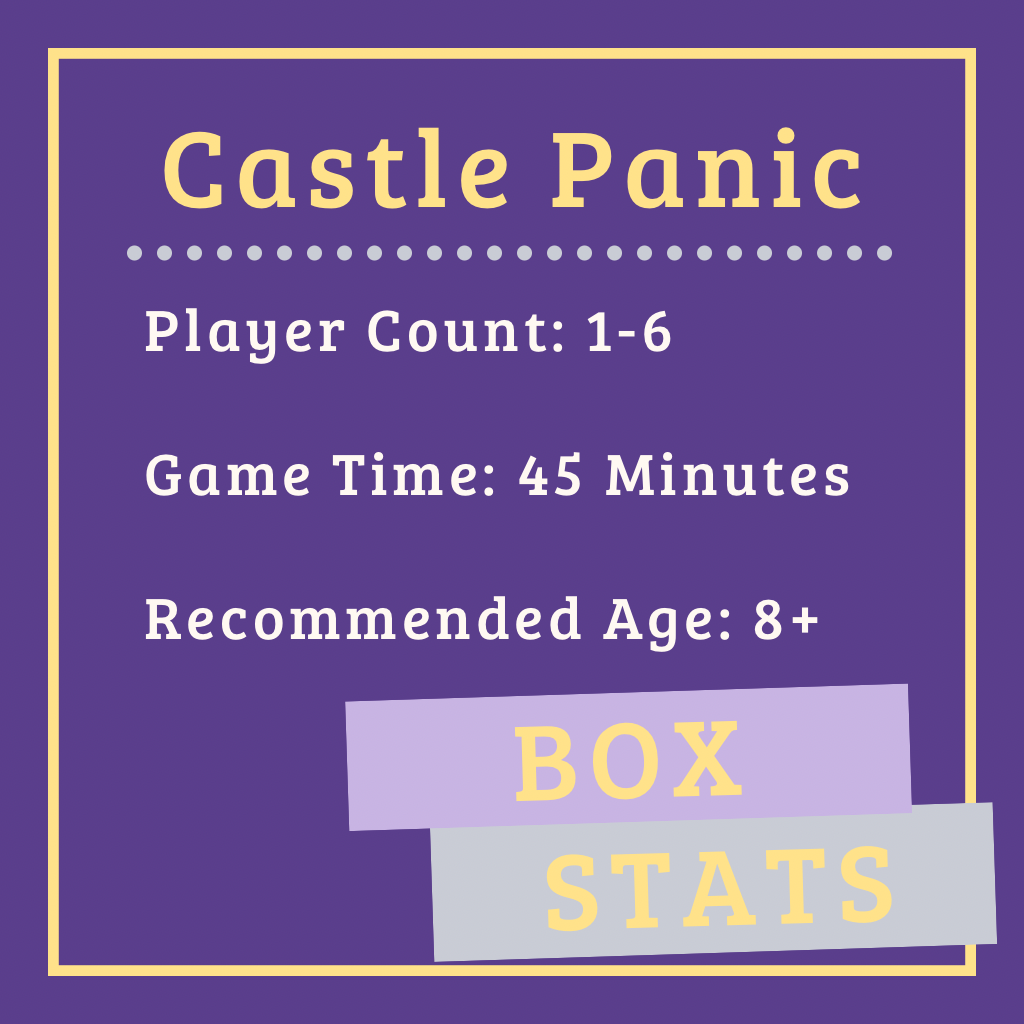
Barriers to Play and How to Remove Them
Castle Panic is one of the best games for including players of all abilities. The group most likely to struggle are the youngest players, probably in the 2-year-old through 5-year-old range.
The game mechanics might confuse them, but the biggest barrier is probably the length of the game.
One of the greatest strengths of this game is the variations section in the rulebook. There are ways to make the game more or less difficult, or competitive instead of cooperative. One of these variations includes removing some of the monster tokens from the game, which would also shorten it.
The other way to include the youngest players is to give them a job instead of making them a player. Castle Panic has several ways toddlers and preschoolers can participate without actually playing. They can roll the die that determines where the monsters are placed or remove the defeated monsters from the board and put them away in the bag.
This allows the youngest to be present and feel included, even if they can’t stick around for the whole game yet.
How to Connect While Playing
We Help Each Other Learn and Grow
Cooperative games are often touted as games for connection simply because they’re cooperative. I’ve played too many games overtaken by a single strategist to believe that, but Castle Panic creates more conversation and cooperation because of how quickly the game changes.
Players each have their own set of cards, but each player is given the opportunity to trade one card per turn. In some cooperative games, players would be tempted to keep the strongest cards to use on their turn, but not in Castle Panic.
The monsters move during each turn, and with special tokens that can add extra monsters or move monsters in unexpected ways, it’s usually to all the players’ advantage to use as many cards as possible before the game changes to turn them useless.
The game mechanics encourage players to be selfless, offering up their best cards to be used at the right moment to avoid a loss.
We Respect Other Players
Castle Panic offers just the right environment to model respect for other players by listening to their strategies and considering them fully. It can be easy for more experienced players to have confidence in their own opinions and disregard the opinions of less confident players.
Remember that by listening, you’re showing those players how to play games in the future.
When you respectfully offer recommendations and let each player make the final choice for their moves, the players around you learn to do so as well, not only in games, but in life.
We Play to Grow, Not Only to Win
In Castle Panic, you win together or lose together, but that still means sometimes you lose when you don’t have the right cards or the board gets overwhelmed with monsters.
Since you all lose together, it’s a great opportunity to buoy those that struggle with losing by turning the loss into a bonding experience.
If players hold positive discussions after every loss, considering strategies that might have helped or hurt the group, those struggling with the loss can learn to create that experience for themselves in other situations.
It also allows players to evaluate their choices and improve their game through feedback, especially as more experienced players can point out opportunities that might have been missed. As long as experienced players do so without calling out individuals or placing blame, those constructive conversations can train the other players in strategy and prioritization.
Who This Game is For
1. Families of various sizes and ages can enjoy this game, but especially those with kids in elementary school or older.
2. Any game group that includes players that are newer to board games will love this one. The simplicity and cooperative nature make it easy for new players to succeed.
3. This is a great one for budding strategists beginning to dip their toes in and practice the planning and flexibility it takes to succeed at higher strategy games. The ability to play alone allows them to practice and improve in a lower stakes environment, then bring those improvements to a game with more players.
Top Learning Skills
Every time you play a game, you have an opportunity to build relationships with other players, but it takes intention to take advantage of that opportunity.
What you’re doing without trying? Building skills that have direct applications to life. Here are the top three skills you build while playing Castle Panic.
Teamwork (Socio-emotional)
In Castle Panic, you have individual turns to use your cards to benefit the group, but you also have a few major limitations. Some of the monster tokens can change up the game unexpectedly and the players need to use different cards to defeat the monsters as they move each turn.
The game rewards selfless cooperation because that powerful card that helps another player right now might not be helpful to the player who refuses to trade it on their own turn. Players who focus on having a productive turn only on their turn can cost everyone the game. The game mechanics reward players who work to make every player’s turn the most productive with a win for the entire group.
Prioritizing (Executive)
You can absolutely play this game only considering the moves you’ll make during the current turn. Can you win that way? Debateable. Planning ahead and prioritizing whether you’ll hit the biggest monsters or the closest monsters are all part of the game. When you choose well, the game often rewards you with a win.
Flexibility (Executive)
Remember that “often” from the last sentence? (I’ll wait while you read it again). One of the things that makes this game so interesting is how quickly it changes. You can have a single monster on the board, think you have everything under control, then pull monster tokens that make you draw more monster tokens and suddenly there are 9 monsters on the board and they’ve all moved closer because of special action monster tokens.
This game requires players to think on their feet and play with what’s on the board and in hand. When you do, sometimes you win. Sometimes you don’t. But variable rewards are much more effective than consistent rewards anyway, so players will always come back for more. My family certainly does.
With Castle Panic, Everyone Can Play
Castle Panic shines in family play with kids old enough to understand the mechanics and learn the strategy, but offers opportunities to bring everyone to the table. If you’re looking for a favorite in mixed-age groups or an introduction to strategy, look no further. Castle Panic strikes just the right balance for beginners and experienced players.
If You Liked This Game
For a natural step up, Pandemic is cooperative, but with more strategy and more complex game mechanics.
If You Struggled With This Game
If this one was too long or a bit too complicated for your players, Outfoxed is similar but simpler. It has the same cooperative element, but the game mechanics are designed with younger kids in mind.