Uno: A Handful of Cards for a Lifetime of Fun
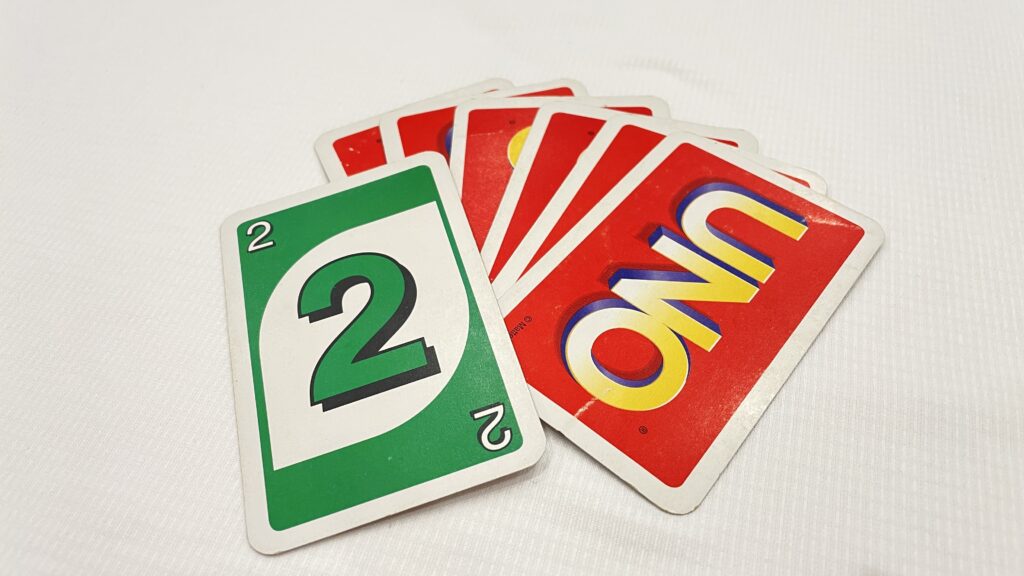
You played it as a kid, surrounded by siblings. Sometimes you won, sometimes you lost, sometimes you fought, but you mostly remember playing together.
Then you grew up and had your own kids. You sat down and taught them each how to play, until one by one they joined the table. Once again you’re surrounded with those you love, playing together until, one by one, those kids will leave the table. But they’ll always visit from time to time and occasionally you’ll have a full table again.
Until then, you look forward to the possibility that someday, you’ll teach your kids’ kids. If you’re very lucky, you might even teach your grandkids’ kids.
With only a handful of cards and a bit of intention, four generations might have those same memories of togetherness. It all started with Uno.
How to Play Simplified (Because Sometimes Rules Are Complicated)
You win by being the first player to get rid of all your cards.
You begin with seven cards in your hand, a draw pile, and one card face up. On your turn, you may only play one card of the same color or number as the face up card. If you cannot play, you must draw a card instead, then the next player takes their turn. When you have a single card left in your hand, you must say, “Uno!”
Then there are a few special cards to make the game more interesting.
A wild card allows the player who plays it to choose which color gets played.
A Wild Draw Four also allows a player to choose the color AND the next player has to draw four cards as their turn.
With a Draw Two, the next player must draw two cards as their turn.
A Reverse changes the direction of play, so if you were playing turns in clockwise order, now you must go counter-clockwise.
A Skip skips the next player’s turn.
The first player who plays all their cards, wins!
Barriers to Play and How to Remove Them
By nature, players need to be able to match cards by shape or color, so the biggest barriers come when someone hasn’t yet learned numbers or can’t see the colors or numbers.
Thankfully, both have simple solutions.
If you’re playing with a child too young to know their numbers, play with your hands face up on the table so you can give them guidance. With time, they’ll pick up the similarities in the shapes and even learn number names if you take the time to identify them while you play.
For those who struggle with visibility, Uno has both a color-blind accessible deck that include symbols for each color and a braille deck for those who know braille. While these decks won’t work for every person, they make the game accessible to a wider variety of players.
How to Connect While Playing
We Play to Spend Time Together
Uno’s versatility and simplicity allow it to really shine as a way to spend time together.
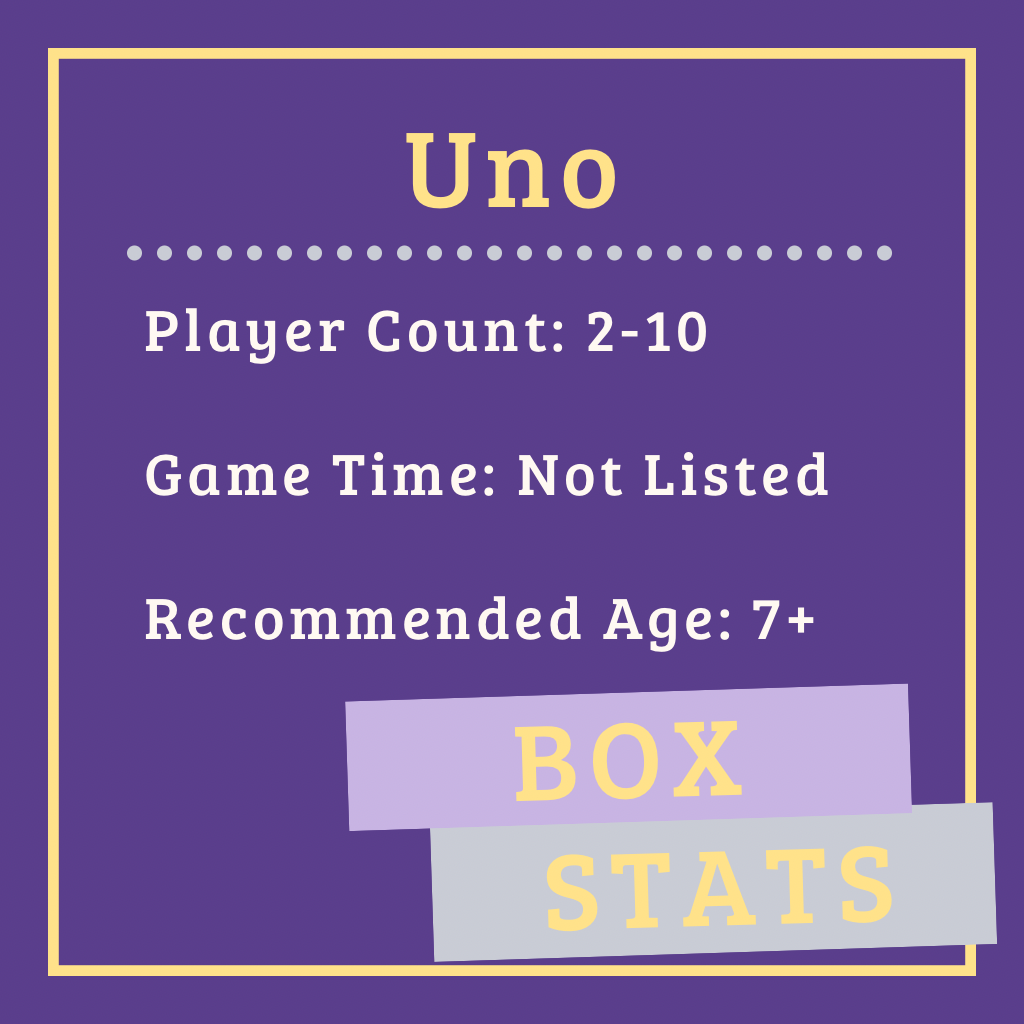
It has a wide range for the number of players (2-10!), meaning you can bring together a wide variety of groups with the game.
For focused time and deep conversations, play one-on-one. The simplicity of the game allows players of any age or experience to join, meaning you can have heartfelt conversations with anyone willing to sit down and play. Play Uno to connect with kids, parents, grandparents, siblings, or friends.
For larger groups, you can include up to ten players for an atmosphere of simple fun and laughter. Each night spent this way creates memories, and those repetitive memories create a sense of lasting belonging. That makes it a solid choice for families, game nights, or organized activities for large groups.
We Help Each Other Learn and Improve
I love introducing the very youngest players to board games and card games by playing Uno, in part because of the many learning opportunities it offers kids who haven’t started school yet.
Start by playing face up to offer support identifying which cards they can play. When including additional players, everyone plays face up. For more experienced players, challenge them to play as if they couldn’t see anyone’s hand so they don’t take advantage of the younger player.
Adding simple repetition helps the very youngest identify colors and numbers on their own. Name the cards as each player plays them. “Green two,” or “Blue five.” The same repetition of the rules helps with learning what the special cards do.
Counting, taking turns, impulse control, colors, numbers, remembering the directions for each special card. The older you get, the less you consciously consider all the skills these players can practice just by learning to play the game.
Who This Game is For
Uno is so versatile that it works well for MANY groups, but I tried to narrow it down to the ones where it most shines. Here’s where I landed:
- Groups with wide age gaps. Whether that’s parents playing with kids, kids with large age gaps, or great-grandparents playing with great-grandchildren, Uno shines here because of its simplicity and familiarity. It’s been around long enough that some who are now grandparents might have played it as kids.
- Beginning players of any age. This is the first game I taught my kids, starting at age 2. It’s simple to introduce to beginners of all ages because it’s easy to teach, easy to get playing, and doesn’t take loads of strategy.
- Large groups of kids playing independently. Whether in a classroom or at events with lots of kids (like family reunions), Uno is a great option for kids to practice the skills to play together without adults present.
Top Learning Skills
Every time you play a game, you have an opportunity to build relationships with other players, but it takes intention to take advantage of that opportunity.
What you’re doing without trying? Building skills that have direct applications to life. Here are the top three skills you build while playing Uno.
Number Recognition (Educational)
Since Uno is a deck of (mostly) numbered cards, you’ll see them over and over. For a child learning to recognize and name numbers, that’s powerful learning practice.
Working Memory (Executive)
For those unfamiliar with working memory, it’s holding and applying information you need to accomplish something. In Uno, the very youngest players begin to do this when they don’t just use a card correctly, but when they use it strategically. Instead of playing a skip to skip the player after them, allowing the next player to win the game, they play the skip when the player after them has a single card left, extending the game.
As adults, we’re constantly absorbing useful information during games of Uno and using it to our best advantage. Someone played a wild, changed the color, then said, “Uno!” Now everyone else tries to change the color before that player gets a chance to end the game, but the best players keep the color that player said in mind.
Working memory is a skill everyone needs in life, and it gets constant, quiet use in a game like Uno.
Impulse Control (Executive)
The youngest players practice this skill every time they don’t immediately play their best card! But they aren’t the only ones. Players of all ages practice this skill anytime they save their special cards (like skips and wild draw fours) for just the right moment.
Anytime the game shifts to your disadvantage, you practice containing your physical reactions to your emotions.
The youngest players also practice this skill as it applies to taking turns. It’s easy to jump too quickly when you can play a card, but players practice patience and control as they wait until their next turn to play.
For a Fun Time with Staying Power, Try Uno
Around since the 1970’s, Uno is already a well-known classic to families everywhere. Due to its simplicity and versatility, the game provides lifetime play for grandparents, parents, and children. If you’re looking for a simple game with a wide, long-lasting range of play, Uno is a staple you can’t pass up.
If You Liked This Game
If you loved Uno, try Skip Bo for similar difficulty with slightly different mechanics. To level up, try Sleeping Queens for additional math skills and extra game mechanics, while still using number cards and power cards.
If You Struggled With This Game
It doesn’t get much simpler than Uno, so if you’re really struggling, matching games or Memory would be a great way to strengthen the skills for playing Uno.
Helpful Resources
- Want more games for players ages 2-5? Try Best Board Games and Card Games for Toddlers and Preschoolers.